

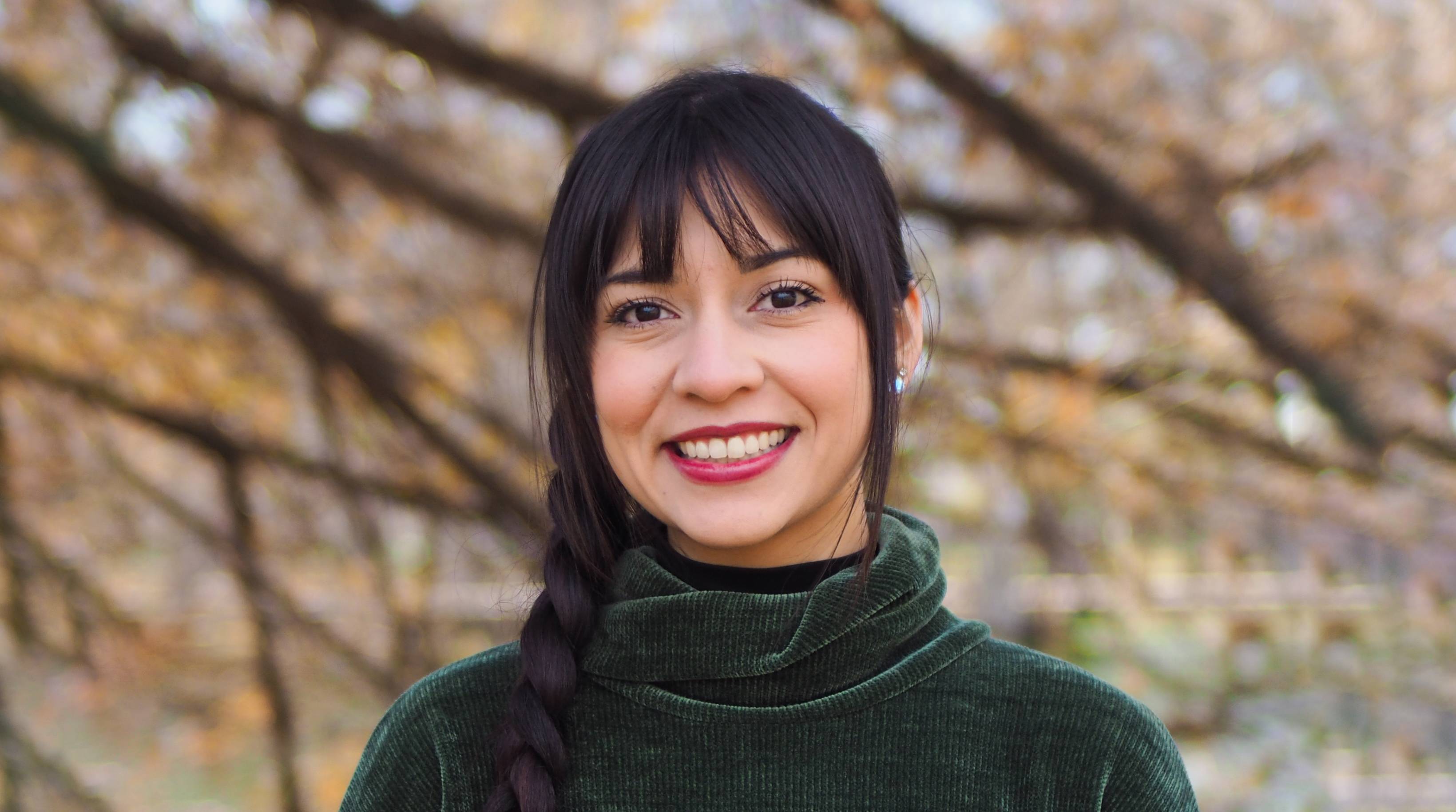
After ten years and two degrees at Texas State University, Isabella Vigil is set to complete her doctoral degree in educational and community leadership — a milestone she describes as the culmination of growing into her place as a scholar, creative thinker, and community leader.
Vigil, who identifies as a neurodivergent Chicana and Indigenous woman, said her path has been shaped by finding a place where she could bring her full identity to her work.
“When I first arrived at TXST as a freshman, something clicked,” Vigil said. “As a Hispanic-Serving Institution, it was the first place where I felt seen. I didn’t have to leave parts of myself behind.”
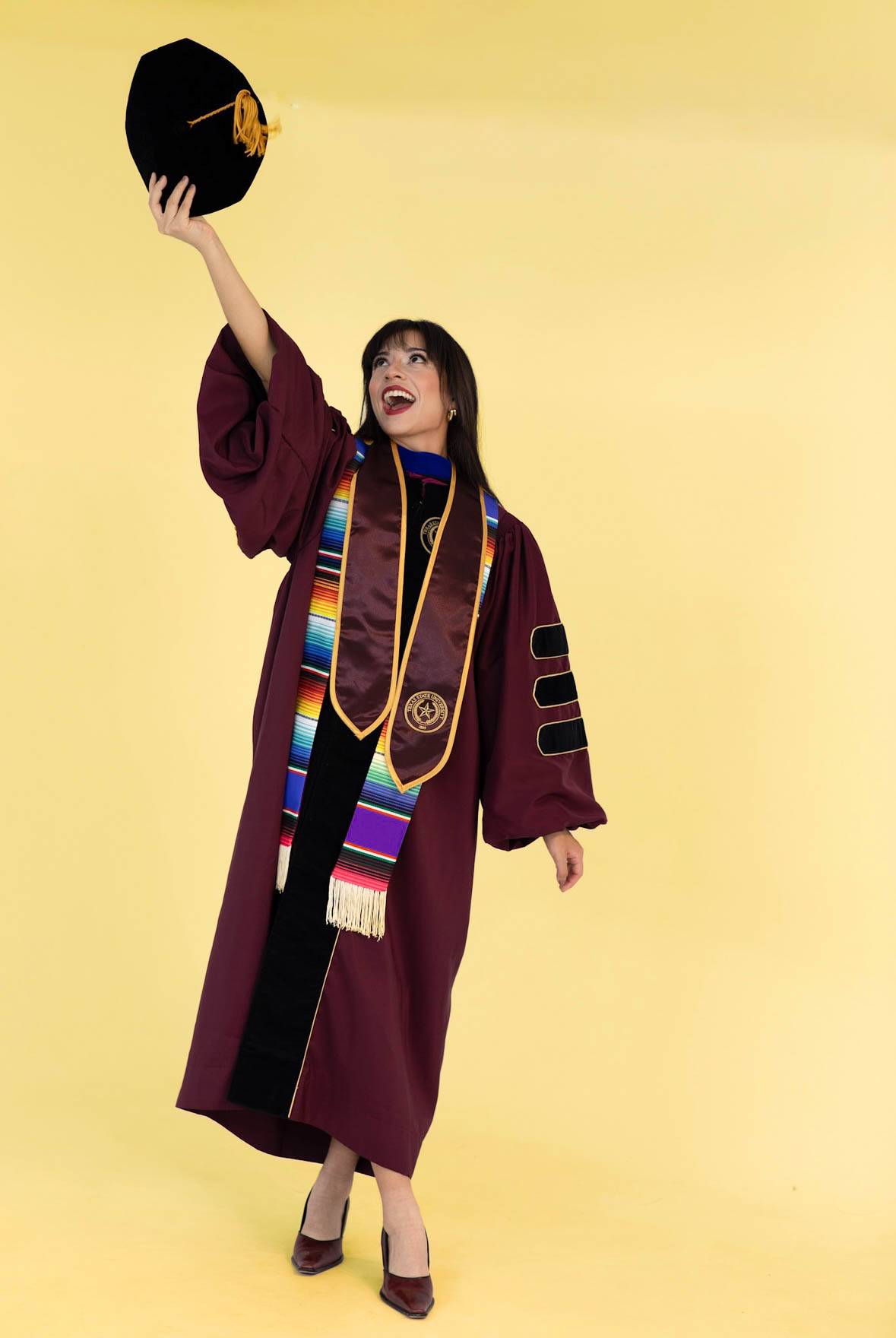
As the youngest member of her cohort, she initially felt less experienced compared to others.
“Over time, I began to recognize that my nonlinear, creative ways of thinking were strengths that shaped how I approached scholarship, leadership, and community work,” she said.
Vigil chose to pursue a Ph.D. in educational and community leadership because of its people-centered approach. The program allowed her to explore leadership rooted in culture, care, and creativity — and to blend research with art, storytelling, and lived experience.
“For me, this Ph.D. is about reimagining what leadership can be and who gets to define it,” she said.
Her mentors played a significant role in shaping her work and confidence as a scholar. Vigil credited Miguel A. Guajardo, Ph.D., Khalid Arar, Ph.D., Dionne Davis, Ph.D., Melissa Martinez, Ph.D., and Michael Ota, Ph.D., for supporting her as a whole person.
“We remind each other that leadership can be gentle, collaborative, and rooted in community,” she said.
As a graduate student at TXST, Vigil found belonging and creativity at the center of her experience. She embraced art-based research methods, describing herself as both a researcher and a storyteller. Her dissertation uses visual art, autoethnography, and social cartography to explore how neurodivergent adults of color navigate identity and belonging.