
A team of students from Texas State University’s McCoy College of Business won the Cognizant Outreach and Aston Martin Aramco Formula One (AMF1) Idea-thon, competing against teams from TXST’s Ingram School of Engineering and the University of Texas at Dallas.
TXST business and engineering students compete in Aston Martin's F1 AI Idea-thon
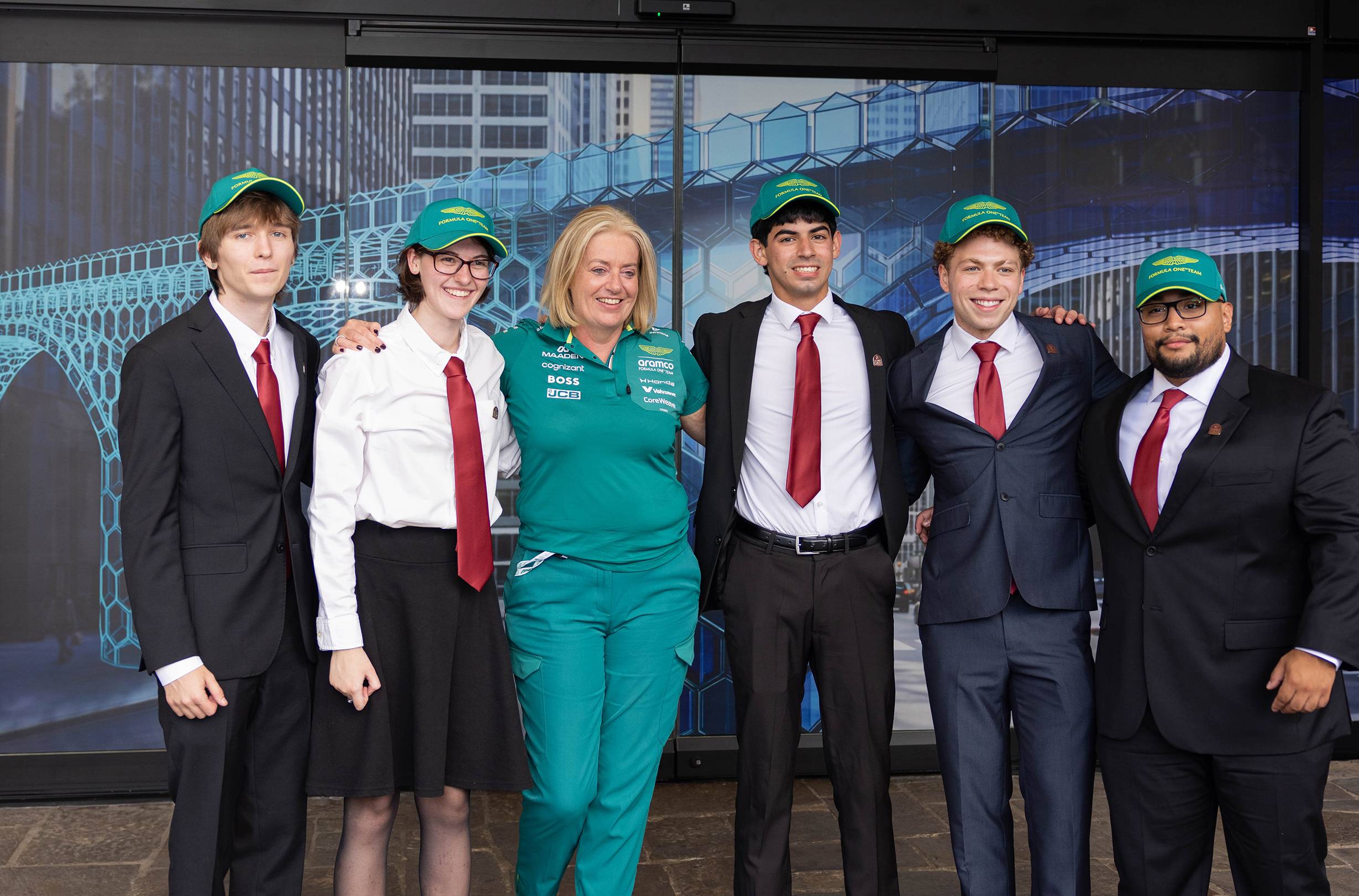
Texas State McCoy College of Business students win an international AI competition, developing innovative solutions to help Aston Martin Aramco Formula 1 communicate its sustainability and community impact.
What is the Aston Martin Aranco F1 Idea-thon?
The competition challenged students to apply their creativity, business knowledge, and generative artificial intelligence to develop solutions for AMF1’s sustainability and community impact challenges. Through the experience, students explored how emerging technology can help organizations address real-world business challenges and communicate their impact in innovative ways.
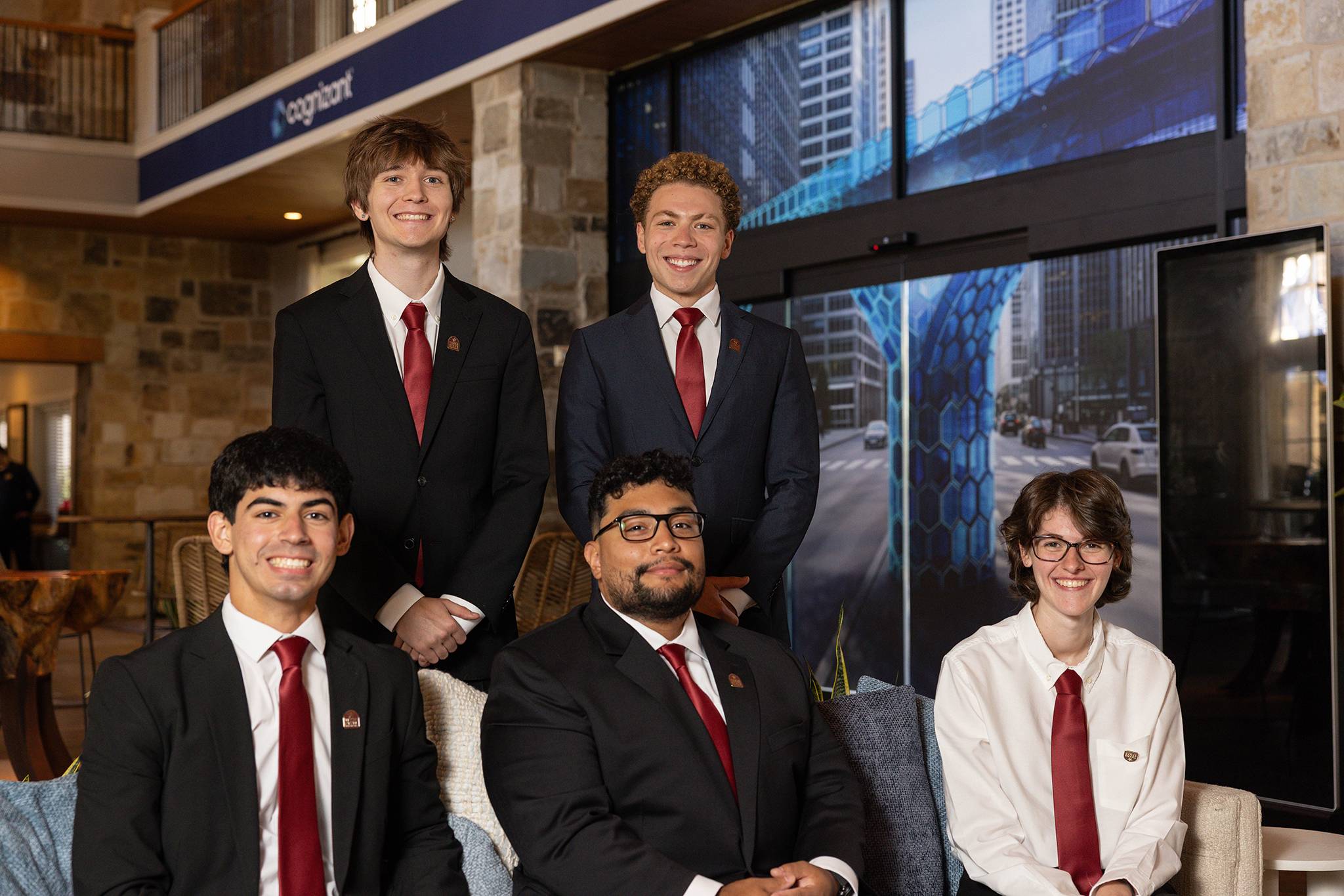
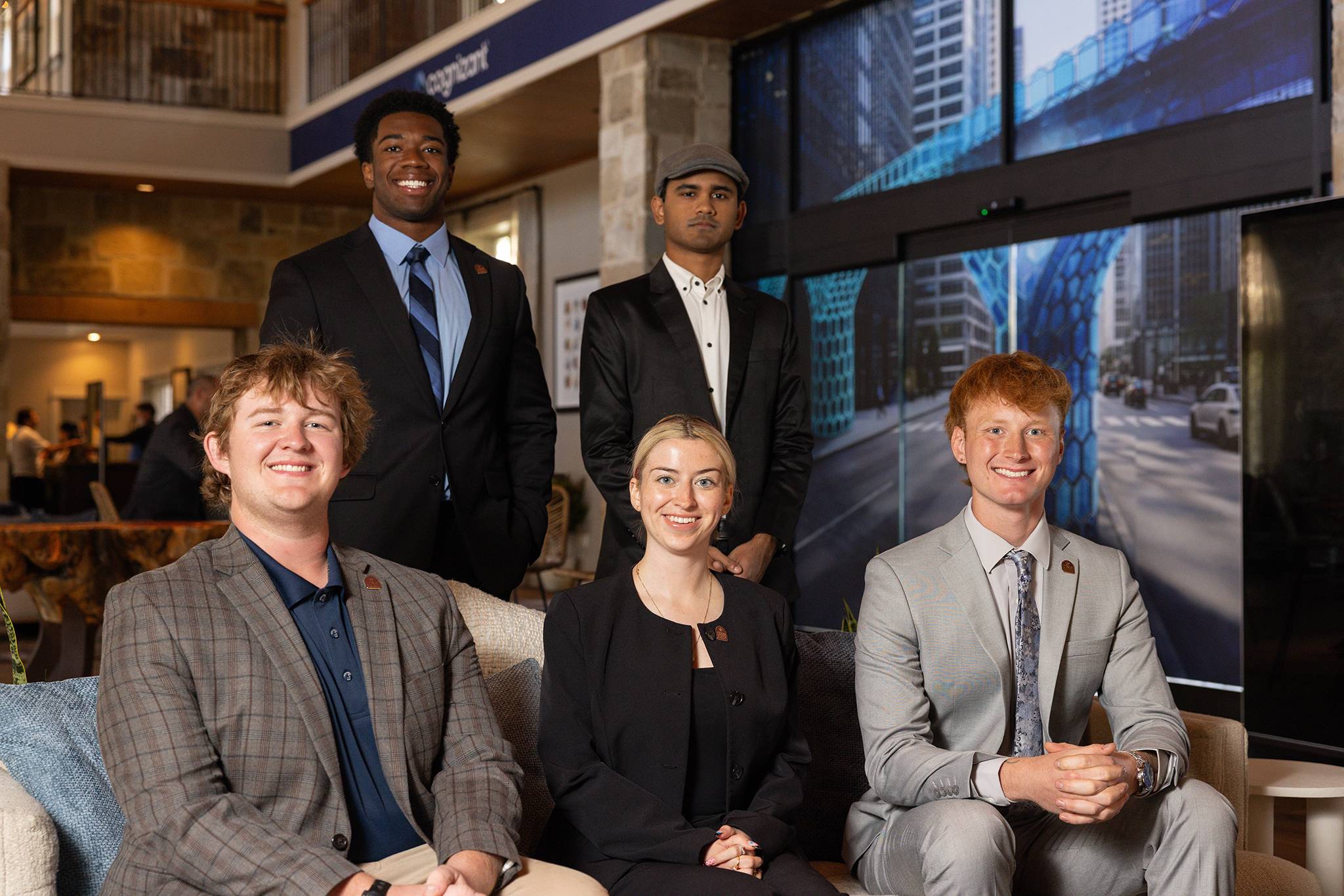
The winning team included Katherine Grover, Rocco Trosclair, Diego Vacaflores, Knox Lewis, and Erick Gutierrez. Students from TXST’s Ingram School of Engineering who participated included Sean-Pascal Michael Swift, Madison Stanchos, Wajeeh Moonwar, Seth Salim Sher Bahsoon, and James Edward Muth.
Each team had six weeks to develop a solution to the challenge: How can AI transform Aston Martin Aramco’s sustainability, inclusion, and community data into a trusted, real-time view of impact, and how can those insights be delivered in creative, engaging ways that make sustainability more tangible and relevant to Formula One audiences?
For Grover, a computer information systems senior, the project required extensive preparation, careful research, and repeated testing.
“I took everything I’ve learned, and I made sure I was doing due diligence,” Grover said. “It was a lot of late nights and double checking.”
How did the teams use AI?
The McCoy College team developed an app and chatbot designed to personalize information based on users’ questions. The goal was to make complex sustainability data easier to understand while ensuring the information remained accurate.
“All of the models would be fed this complicated, dry, long data, and we wanted to make it draft simpler explanations of that data,” Grover said. “When a draft was ready, it would be pushed to a red team agent trying to poke holes and make sure the previous model didn't hallucinate and add anything that's not accurate.”
That additional layer of review reflected one of the central challenges of using generative AI: making information more accessible without sacrificing accuracy or trust.
For the Ingram School of Engineering team, personalization was also central to its approach.
“Our team came up with the idea to utilize an AI engine that would take in data parameters from Aston Martin's sustainability reports,” said Swift, a mechanical engineering senior. “The AI engine would then personalize that data to a user's information, with specified questions being prompted to that user.”
Beyond developing their AI-powered solutions, students had to consider how to communicate their ideas to an audience of industry leaders. At the end of the six-week competition, teams presented their concepts to C-suite executives, requiring them to translate technical ideas into clear, compelling business proposals.
“We had to learn what makes a presentation and how to present to those executives,” Swift said. “Our team learned a lot about, and hopefully will take into the future, different practices for those types of presentations.”
For the McCoy College team, the competition offered an opportunity to apply concepts from computer information systems, marketing, and management to a challenge involving data, technology, and audience engagement.
“To practice design development in a different field that we're not used to, but is an upcoming sector, it was very, very applicable to what we were learning in school,” Swift said.
By working through a real-world challenge for a global organization, students gained experience balancing technical problem-solving with business strategy, communication, and responsible innovation.
Why responsible use of AI matters to students
Students from both teams recognize the world is moving more towards AI. And while it is important to learn how to use it, it’s equally important to learn how to use it responsibly.
“I think everyone understands the risks with AI, or higher ups, hopefully, understand the risk with energy use,” Swift said. “I think AI is pushing different sectors as well as the energy sectors to enhance energy use, and that's going to benefit most society as well.”
The event also brought the Formula One experience to campus through an Aston Martin activation and a fireside chat, giving students additional opportunities to engage with industry perspectives and learn about the intersection of business, technology, and motorsports.