

As a Deaf student, Beth Smiley faced unique challenges in the classroom, both in person and online. When additional health issues surfaced, her TXST classmates and professors stepped up.
The education community and leadership Ph.D. candidate had a previous connection to TXST where she completed a Principal Certification Program. One of her professors then encouraged Smiley to enroll in the doctoral program because of her potential.
“My commitment to that doctoral path became deeply personal just one week before classes began when my mother passed away,” Smiley said. “I promised her I would finish my degree and that I wouldn't let her loss hold me back.”
Smiley redefined what progress meant to her when she temporarily lost the use of her left arm for two months and lost sensation in her right leg. Smiley learned to use a wheelchair and couldn’t drive for a year, so she depended on others to help support her when it came to the classroom.
“The support I received at Texas State was essential to my survival and success in the program,” she said. “When my health conditions emerged, my classmates didn't just offer sympathy. They constantly checked on me and provided transportation so I could attend class and get home safely. My professor also allowed me to meet weekly over Zoom with an ASL interpreter so I could deliver my coursework using one-handed sign language.”
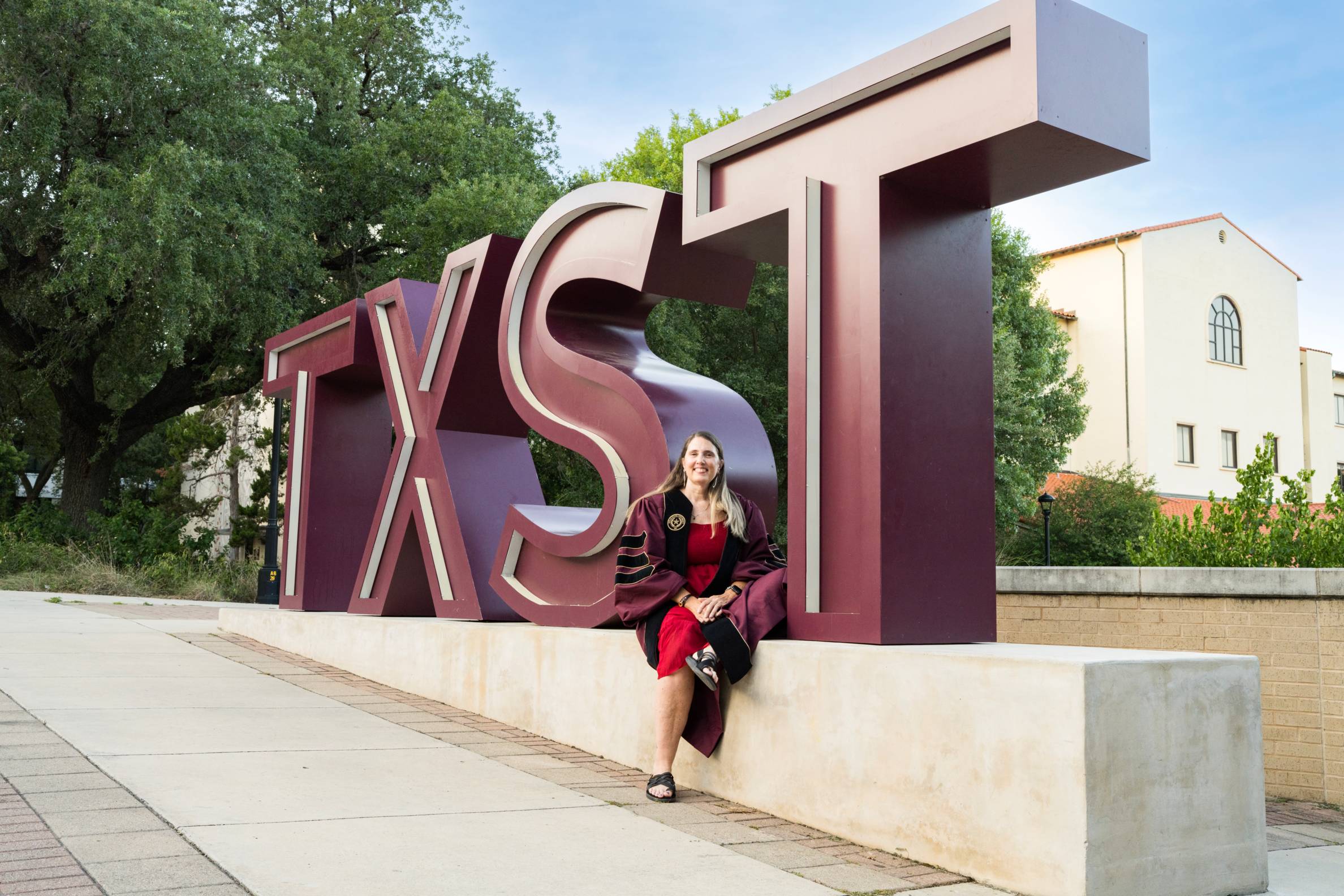
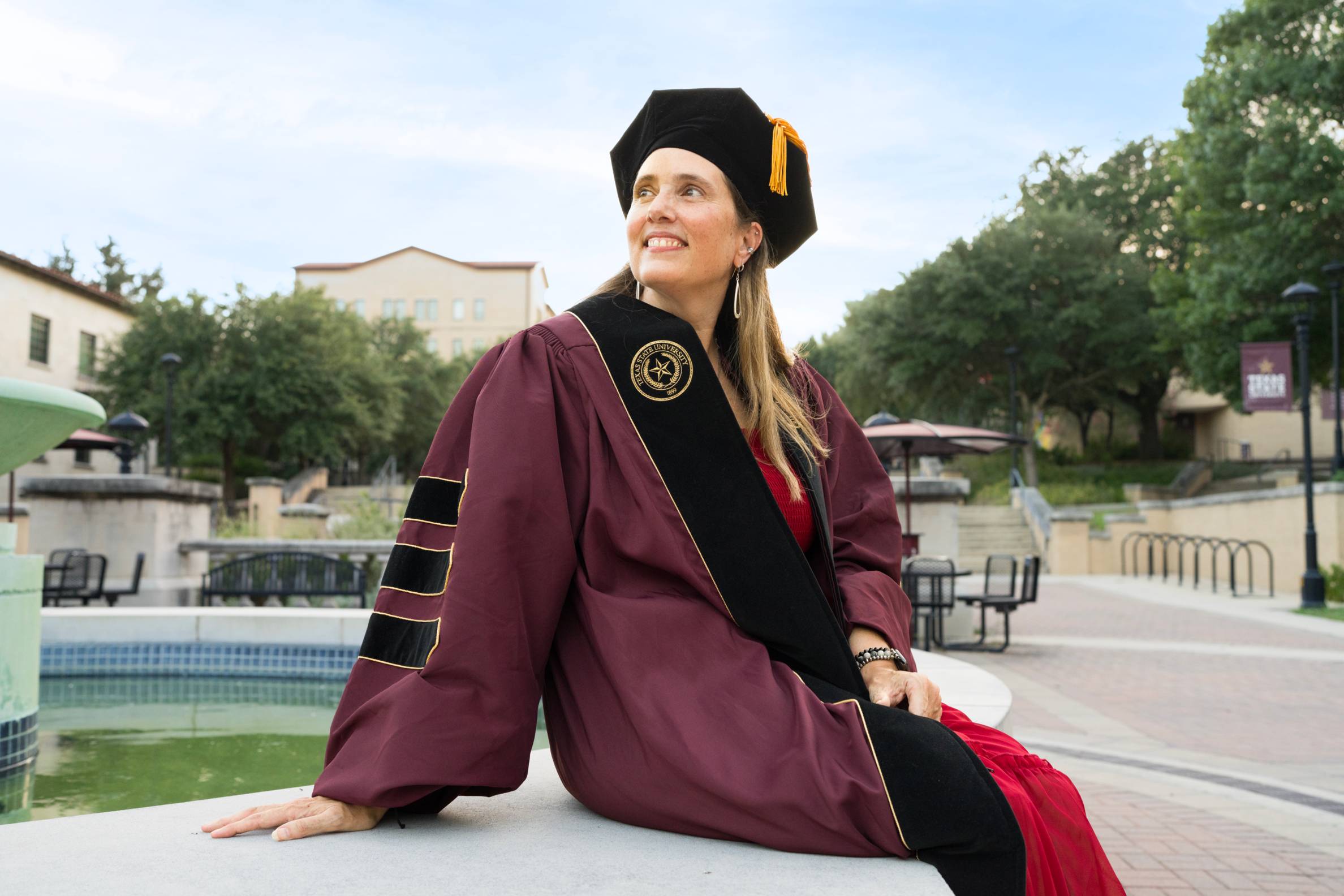 In addition to finding a community at TXST, she connected with a fellow Deaf classmate with whom she took elective courses. Smiley found relief with not needing an interpreter to connect with a classmate. She could communicate directly with her peer who shared her lived experience.