

TXST graduate turns research experience into marine conservation career

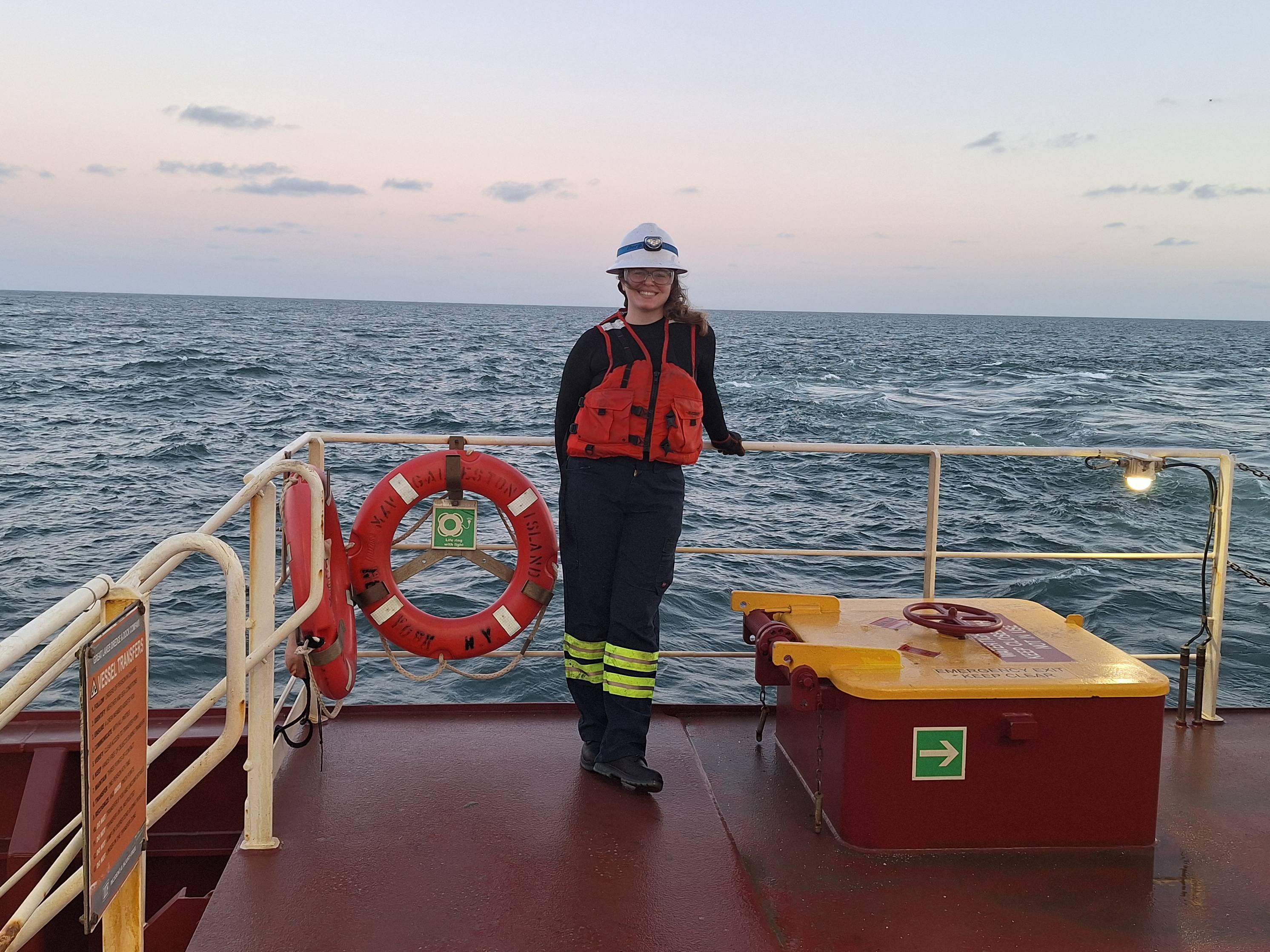
woman in hard hat and life vest standing on off-shore rig with ocean behind her
Mavourneen on a hopper barge in the Gulf.

TXST aquatic biology graduate Isabella Mavourneen turned persistence, research, and field experience into a career helping protect endangered marine species.

Isabella Mavourneen arrived at Texas State University knowing she wanted to work with water and animals. By the time she completed her degree, the aquatic biology graduate had turned that interest into published research, field experience, and a job helping protect endangered marine species.

Mavourneen transferred to TXST after earning two associate degrees from Austin Community College. New to the university, she did not yet know how undergraduates found research opportunities, so she began asking questions and exploring possibilities within and beyond her major.

“I’ve always loved figuring out how things work, like puzzles and games, and I enjoy learning,” Mavourneen said. “I refuse to live a life I don’t want or find fulfilling, and that includes research.” 

Finding a place to begin

After joining the Honors College, Mavourneen created honors contract courses that allowed her to complete independent research projects in courses not traditionally offered for honors credit.

In a world prehistory course with Britt Bousman, Ph.D., she wrote papers examining major developments in human history. Two later became publications: a paper about Neanderthals in the TXST Undergraduate Research Journal and another about gene flow in the British Isles in Crossroads, the University of Michigan’s undergraduate anthropology journal.

Mavourneen also found support through TXST’s Innovation, Discovery, Exploration, and Analysis (IDEA) Center, where Jonathan Vontsteen became a longtime mentor.

“Jonathan has been a mentor for years, since I first started going to the IDEA Center,” Mavourneen said. “He helped me look for jobs, explore conducting research through the IDEA Center, and apply to journals for my papers.”

Her experience showed her that research can begin with a question, a class project, or a conversation with someone who can help identify the next step. 

Persistence leads to opportunity

After applying to the National Science Foundation Research Experiences for Undergraduates program for several years, Mavourneen was accepted into a program at Georgia Southern University in Summer 2024 during her junior year at TXST.

There, she worked with evolutionary entomologist Joshua Gibson, Ph.D., to study ant social behavior and genetics. The study was published in April 2025 in Insectes Sociaux.

“I got the email and started crying and called my mom to tell her,” Mavourneen said. “It means the world to me, knowing that the knowledge I possess and the research I’ve done is so important that it can be published.”

The experience also influenced her TXST capstone project examining differences between native and invasive ant species. 
Mavourneen at Georgia Southern University in Summer 2024.

Turning experience into a career

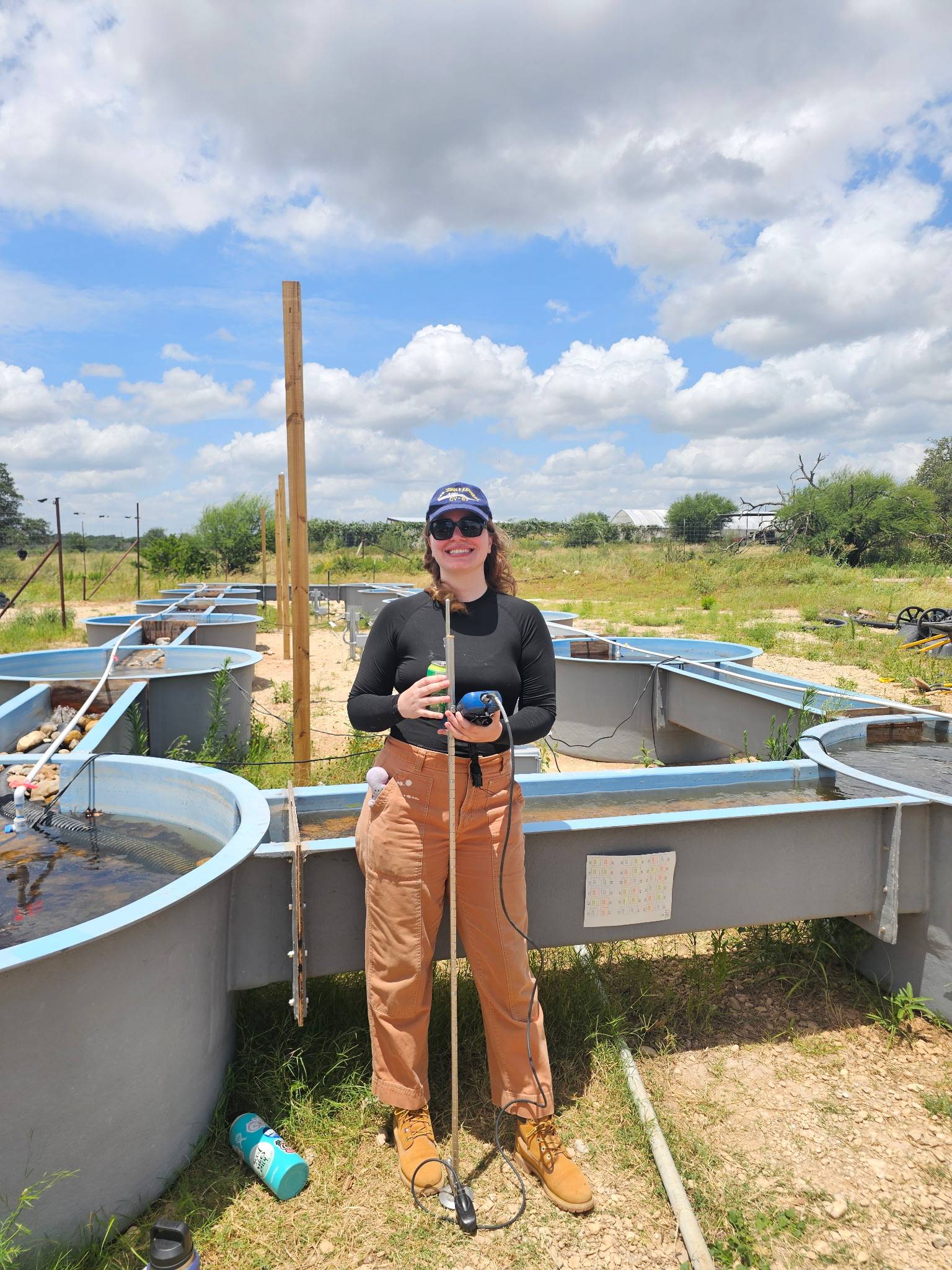
Mavourneen earned a bachelor’s degree in aquatic biology with a minor in anthropology from Texas State in December 2025. Since then, she has worked as a limnology technician with Weston Hugh Nowlin, Ph.D., and his graduate students. At TXST’s Freeman Ranch Experimental Stream Facility, she helps build controlled stream environments with different water levels and amounts of fallen leaves to study their effects on macroinvertebrate communities. In Nowlin’s lab, which conducts research for the Texas Parks and Wildlife Department and the U.S. Army Corps of Engineers, she sorts and identifies macroinvertebrates used to measure freshwater ecosystem health. 

woman standing next to controlled stream environment outside

Mavourneen holding a flow meter, which determines the velocity of moving water of the mesocosms, at the Experimental Stream Facility at Freeman Ranch.

Mavourneen recently accepted a position as an endangered species observer with Coastwise Consulting. Aboard hopper dredges, she will monitor protected marine animals and report incidents while working with the U.S. Army Corps of Engineers and contractors to reduce risks to endangered species.

“Working with endangered animals is a dream come true,” Mavourneen said. “My experience as an aquatic biologist, handling various animals, and working in inland waters like the San Marcos River helped prepare me for this position.”

The Coastwise role is another step toward Mavourneen’s long-term goals. She plans to continue building a career in evolutionary biology and eventually pursue a doctorate in the field.

For Mavourneen, each experience built on the one before it, even when the next step was not always clear. Her journey shows that research can begin with a single question, grow through persistence and support, and lead to opportunities a student may not have imagined at the start.

“If you never ask, the answer will always be no,” she said. “When you stop letting rejection hold you back, you become more willing to put yourself forward and more likely to discover opportunities you never knew existed.”

Mavourneen’s story shows how hands-on research prepares students with the skills and experience needed to succeed in the workforce.