

For Hunter Close, Ph.D., physics and music are both domains with a lot of creative opportunities, especially when it comes to thinking “differently.”
While one is thought of as logic, precision, and the pursuit of certainty, and the other associated with emotion, expression, and creativity, to Close, an associate professor of physics at Texas State University, both “are ultimately about beauty, form, meaning, and life as a human being.”
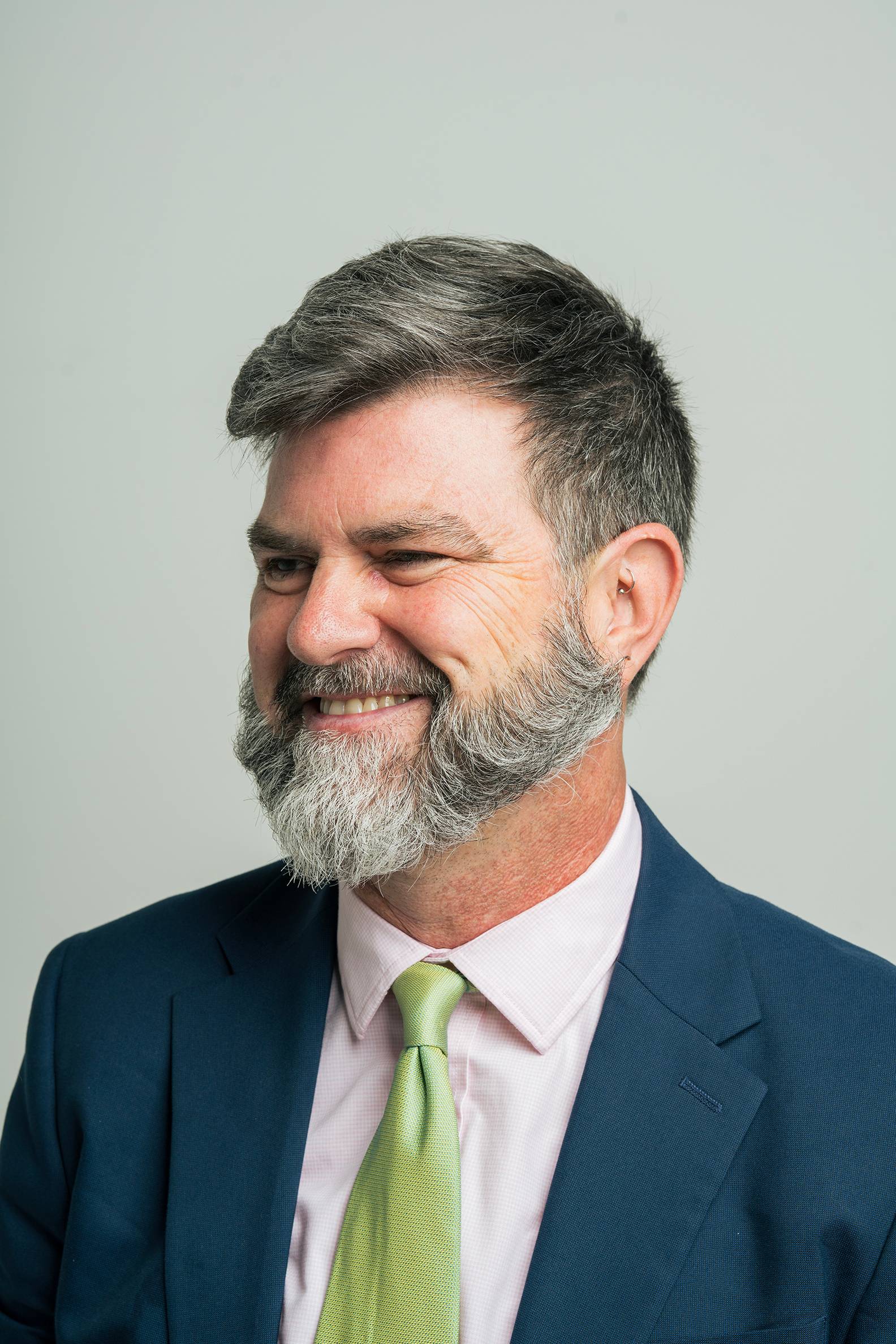
“In physics as in music, things fit together,” Close says. “On an abstract level, they both have the beauty of harmony.”
The physicist has spent the last 15 years at TXST teaching a broad range of courses, from introductory mathematical physics to graduate quantum mechanics, and inspiring students to allow themselves to be multidimensional in their studies, interests, and pursuits.
But in recent years, another part of his identity moved back into the center of his life: music.
Long before he earned his doctorate in physics, Close was drawn to music. He remembers becoming interested after listening to his parents’ old records of The Beatles and Paul Simon, and watching MTV in the early 1980s: “I felt like I was witnessing musicians explore the meaning of life in a thousand ways.” Scientific curiosity came later, when he encountered physics as a junior in high school and felt a similar kind of excitement. But by his senior year, he felt a pressure that many students know well: which passion was he supposed to pursue?
Physics won at the time for Close as he noted that it was enjoyable, mysterious, fundamental, and also practical.
Close went all in on science, building a career around the discipline of physics and teaching. However, music remained a part of his life, albeit not always the part that had the most room to grow. There were weekend performances and jam sessions for the trombone player, but his artistic hunger would not be satiated. Then, during COVID, the music bug began calling again in a way he could not ignore.
Close would wake up early with dreams of the Bach Cello Suites, stirred to pick up his horn. What began as a quiet internal nudge eventually became undeniable.
Close was serendipitously led to an open chair opportunity in the Texas State Jazz Lab Band, which he took, and realized he needed to continue forward with his ambitions. He eventually applied to the Master of Music program with a jazz performance concentration at Texas State.
But the process was not effortless. “It was challenging for my brain to switch gears from teaching physics to rehearsing music ten minutes later,” said Close. That adjustment from the role of professor to the role of student was a bit overwhelming at first and required humility. Close said he wanted the TXST music community to understand that he was there to learn music, not to be recognized for his rank in another field.
There was also adjusting to a different kind of discipline. While physics is precision and the pursuit of a clear answer, jazz asked something else of him.